
I've been thinking about a post I've been trying to write for more than week now. I just can't seem to get it right. I finally decided today, if its not going to work, drop it and move on.
So I did.
Its ok to stop the struggle if its just not working. The minute I made the decision, my mind cleared and I could focus again on other things, including the very learning point I decided to write about here.
Is there something big stopping you from moving forward?
Please see my website at www.managingforthefirsttime.com for more techniques, tips and advice on this topic and others.

Showing posts with label Self Development - Behaviour. Show all posts
Showing posts with label Self Development - Behaviour. Show all posts
Tuesday, 15 November 2011


Wednesday, 2 November 2011
When is enough, enough and what does enough look like?
I had a couple of isolated discussions on different topics this week which, in reflection, I've realised are intertwined.
One was on the topic of doing everything with purpose (brought up in my yoga class) and the other was on delivering perfection (with a new member of the team).
I argued at the time that you shouldn't try and deliver perfection because it invoked the law of diminishing returns and that the Pareto 80/20 rule should be our guiding principle in order to deliver the ever increasing workload effectively. This didn't seem to go down too well with the new employee.
However what I realise now was that the real core value they were trying to express was delivering with purpose. To deliver something knowing that they had given their absolute best shot without compromise (not just ticking the box to move the task on).
The trick is:
1: Deliver everything with purpose and give your fullest attention to it so that you can walk away with integrity. Don't just tick the box.
2: Knowing when to stop and being comfortable with your credibility from the thing you delivered.
I realise this is a fine line and a tough one to judge but don't assume one or the other is acceptable on its own, its not.
Ask yourself if you have met the intent of both of these during the next piece of work you deliver. Practice makes perfect.
Please see my website at www.managingforthefirsttime.com for more techniques, tips and advice on this topic and others.
One was on the topic of doing everything with purpose (brought up in my yoga class) and the other was on delivering perfection (with a new member of the team).
I argued at the time that you shouldn't try and deliver perfection because it invoked the law of diminishing returns and that the Pareto 80/20 rule should be our guiding principle in order to deliver the ever increasing workload effectively. This didn't seem to go down too well with the new employee.
However what I realise now was that the real core value they were trying to express was delivering with purpose. To deliver something knowing that they had given their absolute best shot without compromise (not just ticking the box to move the task on).
The trick is:
1: Deliver everything with purpose and give your fullest attention to it so that you can walk away with integrity. Don't just tick the box.
2: Knowing when to stop and being comfortable with your credibility from the thing you delivered.
I realise this is a fine line and a tough one to judge but don't assume one or the other is acceptable on its own, its not.
Ask yourself if you have met the intent of both of these during the next piece of work you deliver. Practice makes perfect.
Please see my website at www.managingforthefirsttime.com for more techniques, tips and advice on this topic and others.
Saturday, 22 October 2011
Get up 30 minutes early?
I picked up on this article a couple of weeks ago on 5 things to do every day for success (here). Its not the only time I've seen the first recommendation of such an article to be "get up 30 minutes early" as a way to get ahead on the day's events.
In principle I agree with this but have you actually tried it? Very few people are sure will be able to sustain such a change. But that's because they are missing the obvious. They expect to take that extra 30 minutes without giving something in return to restore the balance.
Here's the trick, balance it out by going to bed 30 minutes early. That's the first thing to do.
Please see my website at www.managingforthefirsttime.com for more techniques, tips and advice on this topic and others.
In principle I agree with this but have you actually tried it? Very few people are sure will be able to sustain such a change. But that's because they are missing the obvious. They expect to take that extra 30 minutes without giving something in return to restore the balance.
Here's the trick, balance it out by going to bed 30 minutes early. That's the first thing to do.
Please see my website at www.managingforthefirsttime.com for more techniques, tips and advice on this topic and others.
Saturday, 1 October 2011
Balance and Rest

Ignoring this fact (and it is a fact, everyone needs rest) will ultimately lead to poor performance and likely mistakes. But you'll need to figure out what your 'rest' looks like.
If you're an introvert, this may be calm activities, possibly in isolation and some quiet. For an extrovert, it may be out and about amongst it all soaking up the atmosphere.
It doesn't matter what helps you to rest and recuperate, what matters is that you make the time to do whatever is right for you. Now do it.
Please see my website at www.managingforthefirsttime.com for more techniques, tips and advice on this topic and others.
(Photo by seabamirum via flickr used under a creative Commons Licence)
Wednesday, 24 August 2011
Appropriateness of Feedback
This Sunday morning as I was sitting having breakfast and surfing the web on my iPad (I know; I should really put it down) when I started to read a comments trail which followed a researcher's open request on LinkedIn to complete their masters dissertation questionnaire.
 I had responded to the request earlier in the week by completing the survey online. I feel it's right to support those that are asking for relatively free things from others (5 minutes of your time) especially if it's for student research (I was a student too looking for support).
I found that people were using the open forum comments section to criticise and denounce aspects of the survey they did not agree with. It staggered me as to how damaging this feedback was.
Feedback is supposed to be a gift
Usually I find that managers find it hard to give valuable and constructive (but often negative) feedback to support and develop their employees. I work hard to support them to have the management courage to ignore the short term uncomfortable situation in order to give this ultimately positively impacting feedback.
Here I found feedback being given but in entirely the wrong way. I could see it being taken in no other way than negatively, with no real support to help the individual improve. One of the biggest problems was that it was given in an open forum, hardly an environment where the individual would be focused on the feedback itself and learning from it, rather than worrying about what everyone else reading it would be thinking.
Would you walk up to one of your employees in the middle of the office and give them feedback in front of everyone else on what they did wrong and what you therefore thought of their work? Of course not.
That's the key message with feedback.
It has to be given in a way that helps and directs the individual to make the improvement by promoting reflection and learning. Anything other than that is scoring points against them. You may not mean it, but that's the impact.
Feedback is a gift but as the giver of it (the communicator), you have to responsibility to ensure you do it right.
Please see my website at www.managingforthefirsttime.com for more techniques, tips and advice on this topic and others.
(Photo by striatic via flickr used under a creative Commons Licence)

I found that people were using the open forum comments section to criticise and denounce aspects of the survey they did not agree with. It staggered me as to how damaging this feedback was.
Feedback is supposed to be a gift
Usually I find that managers find it hard to give valuable and constructive (but often negative) feedback to support and develop their employees. I work hard to support them to have the management courage to ignore the short term uncomfortable situation in order to give this ultimately positively impacting feedback.
Here I found feedback being given but in entirely the wrong way. I could see it being taken in no other way than negatively, with no real support to help the individual improve. One of the biggest problems was that it was given in an open forum, hardly an environment where the individual would be focused on the feedback itself and learning from it, rather than worrying about what everyone else reading it would be thinking.
Would you walk up to one of your employees in the middle of the office and give them feedback in front of everyone else on what they did wrong and what you therefore thought of their work? Of course not.
That's the key message with feedback.
It has to be given in a way that helps and directs the individual to make the improvement by promoting reflection and learning. Anything other than that is scoring points against them. You may not mean it, but that's the impact.
Feedback is a gift but as the giver of it (the communicator), you have to responsibility to ensure you do it right.
Please see my website at www.managingforthefirsttime.com for more techniques, tips and advice on this topic and others.
(Photo by striatic via flickr used under a creative Commons Licence)
Wednesday, 20 July 2011
Audits - Prepare Yourself
I’m always slightly amused by the fear that comes over everyone when they are told an audit is due.
The issue is that we are all sometimes guilty of only using the frameworks audited against every year (or however often they are audited) in the month the audit is due. You go into the cabinet and dust off the folder of materials from last time and then update; making it up as best as you can to try and score the most points.
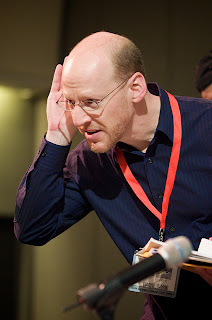
Sound familiar? Don't you want to get the best score?
Begin with the outcome in mind. It is worth remembering an audit’s purpose.
The definition of the word is to conduct a systematic review of and its origin is from late middle english from the Latin auditus ‘hearing’ deriving from audire ‘hear’.
It’s this point that staggers me every time, the fact that (unless your job depends on a certain ‘score’; and how often does that actually happen) the value of the audit is in your listening to the feedback.
Don’t see the one day audit as something in which you have to justify your team’s processes and performance against; see it as your own private consultant who has just spent eight hours looking for ways to help you improve what you and your team does.
Don’t fear an audit, embrace it.
Please see my website at www.managingforthefirsttime.com for more techniques, tips and advice on this topic and others.
(Photo by DaveFayram via flickr used under a creative Commons Licence)
The issue is that we are all sometimes guilty of only using the frameworks audited against every year (or however often they are audited) in the month the audit is due. You go into the cabinet and dust off the folder of materials from last time and then update; making it up as best as you can to try and score the most points.

Sound familiar? Don't you want to get the best score?
Begin with the outcome in mind. It is worth remembering an audit’s purpose.
The definition of the word is to conduct a systematic review of and its origin is from late middle english from the Latin auditus ‘hearing’ deriving from audire ‘hear’.
It’s this point that staggers me every time, the fact that (unless your job depends on a certain ‘score’; and how often does that actually happen) the value of the audit is in your listening to the feedback.
Don’t see the one day audit as something in which you have to justify your team’s processes and performance against; see it as your own private consultant who has just spent eight hours looking for ways to help you improve what you and your team does.
Don’t fear an audit, embrace it.
Please see my website at www.managingforthefirsttime.com for more techniques, tips and advice on this topic and others.
(Photo by DaveFayram via flickr used under a creative Commons Licence)
Wednesday, 6 July 2011
Confident and Humble
If you are going to succeed as a manager then you clearly need be seen to be confident and sure in your thoughts and actions (even if you do not feel super confident inside).
 Your strength in tough times gives a crutch to your team when they need to know they are on the right path.
However, take caution in ensuring that your confidence does not become overbearing and turn into perceived arrogance.
One way to do this is by ensuring that you constantly challenge yourself to be humble. Taking the word's definition from the Oxford Dictionary, "offered with or affected by a modest estimate of one's importance"
What a great way to lead. The strength that the team looks for will simply come from your character rather than how you try and 'show' yourself to be.
I believe that confidence is demonstrating that you respect yourself and coupling this with a humble nature in which you respect others as equals is a powerful leadership combination.
Those that think they are important and act as such, seldom are.
Those that don't seem to be the more content, relaxed, self assured, interested and ultimately more genuine managers and leaders.
How do you want to portray yourself?
Please see my website at www.managingforthefirsttime.com for more techniques, tips and advice on this topic and others.
(Photo by Wonderlane via flickr used under a creative Commons Licence)

However, take caution in ensuring that your confidence does not become overbearing and turn into perceived arrogance.
One way to do this is by ensuring that you constantly challenge yourself to be humble. Taking the word's definition from the Oxford Dictionary, "offered with or affected by a modest estimate of one's importance"
What a great way to lead. The strength that the team looks for will simply come from your character rather than how you try and 'show' yourself to be.
I believe that confidence is demonstrating that you respect yourself and coupling this with a humble nature in which you respect others as equals is a powerful leadership combination.
Those that think they are important and act as such, seldom are.
Those that don't seem to be the more content, relaxed, self assured, interested and ultimately more genuine managers and leaders.
How do you want to portray yourself?
Please see my website at www.managingforthefirsttime.com for more techniques, tips and advice on this topic and others.
(Photo by Wonderlane via flickr used under a creative Commons Licence)
Wednesday, 4 May 2011
Its not what you know, its who you know
A new take on the phrase "it's not what you know it's who you know". It's who you know used to be about social classes, rich and poor, nowadays it is still about who you know rather than what you know. The difference is that who you know is based on your networking and relationship building. It's about the opportunity you create and develop.
Furthermore, you can't know everything, it's what you know implies power and hold over others. That's not the way to work. You need others; you won't realise your full potential unless you engage with others and utilise them to reach the bigger goal.
And don't think this only works for teams. Think about the lone artist, the individual. Who is their muse, their support network, their encouragement and reminder of their goals?
Everyone needs someone else, figure out who you need to know and get to know them.
Please see my website at www.managingforthefirsttime.com for more techniques, tips and advice on this topic and others.
Furthermore, you can't know everything, it's what you know implies power and hold over others. That's not the way to work. You need others; you won't realise your full potential unless you engage with others and utilise them to reach the bigger goal.
And don't think this only works for teams. Think about the lone artist, the individual. Who is their muse, their support network, their encouragement and reminder of their goals?
Everyone needs someone else, figure out who you need to know and get to know them.
Please see my website at www.managingforthefirsttime.com for more techniques, tips and advice on this topic and others.
Sunday, 3 April 2011
The Time is Now
I wanted to share a post that I read by Brett Arends over at SmartMoney.com focusing on the future value of today's money (cleverly wrapped around the current hot topic of the iPad 2).
Its a challenging piece which really will make you think about the disposable income in the future. However it also made me think about the idea of action (or more importantly inaction) today and its effect on the future.
What will inaction today cost you in the future?
The email you are avoiding (or the bulging email inbox that scares you to get in and deal with)
The coaching you really need to give to challenge a potentially disruptive employee behaviour
The weekly review which will ensure you have the right focus for the upcoming week's activities
In fact, anything that seems difficult today is likely to be more difficult tomorrow. Deal with it as soon as you can, The Time is Now.
Its a challenging piece which really will make you think about the disposable income in the future. However it also made me think about the idea of action (or more importantly inaction) today and its effect on the future.
What will inaction today cost you in the future?
The email you are avoiding (or the bulging email inbox that scares you to get in and deal with)
The coaching you really need to give to challenge a potentially disruptive employee behaviour
The weekly review which will ensure you have the right focus for the upcoming week's activities
In fact, anything that seems difficult today is likely to be more difficult tomorrow. Deal with it as soon as you can, The Time is Now.
Thursday, 24 March 2011
A place to start
Look first to yourself for a place to start. After all its what you've (theoretically) got the most control over.
Some of these posts will be focused on books that can help with the topics I want to cover. The first is possibly one of the most famous out there, The 7 Habits of Highly Effective People by Stephen R Covey. You can find it on Amazon here.
The first 3 habits are all about you and, alone, can be some of the best learning out there for you to develop yourself. The 3 habits are:
However, really taking this seriously, taking your development seriously will get you started and build a solid foundation to start managing others.
Please see my website at www.managingforthefirsttime.com for more techniques, tips and advice on this topic and others.
Some of these posts will be focused on books that can help with the topics I want to cover. The first is possibly one of the most famous out there, The 7 Habits of Highly Effective People by Stephen R Covey. You can find it on Amazon here.
The first 3 habits are all about you and, alone, can be some of the best learning out there for you to develop yourself. The 3 habits are:
- Be proactive
- Begin with the end in mind
- Put first things first
However, really taking this seriously, taking your development seriously will get you started and build a solid foundation to start managing others.
Please see my website at www.managingforthefirsttime.com for more techniques, tips and advice on this topic and others.
Saturday, 12 March 2011
First Look Inwards
Focus on yourself first. Now I don’t mean that you become the selfish, inwardly focused manager who simply serves (and demands others to also serve) their ego and objectives. This is about you organising yourself for the benefit of others. In this case your team.
You must give as much time to organising yourself as to your people. Most of the management books I have read seem to focus on ways to ‘control’ your team. Instead look at yourself first and seek improvements there.
In other words, first look inwards and then outwards.
What benefits might you find there, if you truly do organise yourself better? I guarantee at the very least, you will look more professional, more calm and definitely more in control (a relatively crucial skill as a manager don’t you think).
Have you ever seen that great manager who seems to have it all under control? You want to be more like them, right? They are leading by example and engaging you to do the same simply by the way they present themselves. You can do the same, but it requires you to first look inwards.
Subscribe to:
Posts (Atom)